
Managing Homeowner Expectations During a Custom Build
Summary
For most homeowners, a custom build is their biggest-ever financial emotional investment. To prevent 10 p.m. "panic texts," you must bridge the gap between their vision and construction reality. This starts with clear pre-construction talks about allowances, a consistent weekly communication rhythm, and a digital system to track the hundreds of decisions that keep a project on schedule.
On this page
- Why homeowner expectations get misaligned on custom builds
- How to set realistic expectations before the first shovel hits the ground
- What a communication plan actually looks like on a custom build
- How to handle scope changes without damaging the relationship
- Common situations where expectations break down mid-build
- How to use technology to make communication more consistent
- What the best GCs do differently when it comes to client relationships
Custom home builds are some of the most rewarding projects you'll ever run. They're also the ones most likely to turn a perfectly reasonable person into someone who's texting you at 10pm about cabinet hardware. It's not because homeowners are difficult. It's because building a custom home is the biggest financial decision most people will ever make, and they have almost no frame of reference for how the process actually works. That gap between what they imagined and what's happening on site is where most project problems are born.
Managing expectations isn't a soft skill. It's a core part of your job, and the GCs who get really good at it finish projects with fewer change orders, fewer disputes, and a lot more referrals.
Why homeowner expectations get misaligned on custom builds
Most homeowners come into a custom build with a mood board, a wish list, and a vague sense that the budget covers all of it. They've watched renovation shows, scrolled through Pinterest for months, and talked to a few neighbors who built houses years ago under completely different market conditions. By the time they sign your contract, they've built up a version of the project in their head that may not match the drawings, the allowances, or the timeline at all.
The misalignment usually starts in pre-construction. If the early conversations focus too much on excitement and not enough on reality, you'll spend the entire build playing catch-up. A homeowner who doesn't understand what an allowance is, or why a lead time matters, will feel blindsided every time reality shows up. And reality always shows up.
How to set realistic expectations before the first shovel hits the ground
The pre-construction phase is your best opportunity to get aligned with a client, and most GCs don't use it nearly as well as they could. Before you break ground, your homeowner should understand a few things clearly.
First, they need to understand how allowances work. An allowance is a placeholder number in the budget for items that haven't been selected yet, like fixtures, flooring, or appliances. If the allowance is $8,000 for kitchen appliances and they pick a range that costs $14,000, there's a $6,000 overage. That's not a surprise unless you never explained it. Walk clients through every allowance line item before construction starts and tell them explicitly what budget level of product that number is based on. Most overages on custom builds trace back to allowances that were never clearly explained.
Second, they need a realistic picture of the timeline. Not just the completion date, but how construction actually unfolds. Explain that there will be periods where the house looks like nothing is happening, especially during rough-in phases. Explain that weather, inspections, and material deliveries create gaps. If they're not prepared for a week with no visible progress, that week will feel like a red flag to them even when everything is completely on track.
What a communication plan actually looks like on a custom build
You don't need a formal communication plan document. You need a consistent rhythm that keeps clients informed without pulling you off the job every time they get anxious. The best GCs build communication habits that make information flow automatically so clients feel in the loop without having to chase you down.
A weekly project summary is probably the single most effective tool you can use. It doesn't have to be long. It just needs to cover what got done this week, what's happening next week, and anything the client needs to decide or review. When clients get a reliable update every week, they stop sending the "just checking in" texts because they know information is coming. Platforms like Ally Project Management can auto-generate these weekly reports using AI, which means you're not spending your Sunday nights writing summaries. The report goes out, the client feels informed, and you stay focused on building.
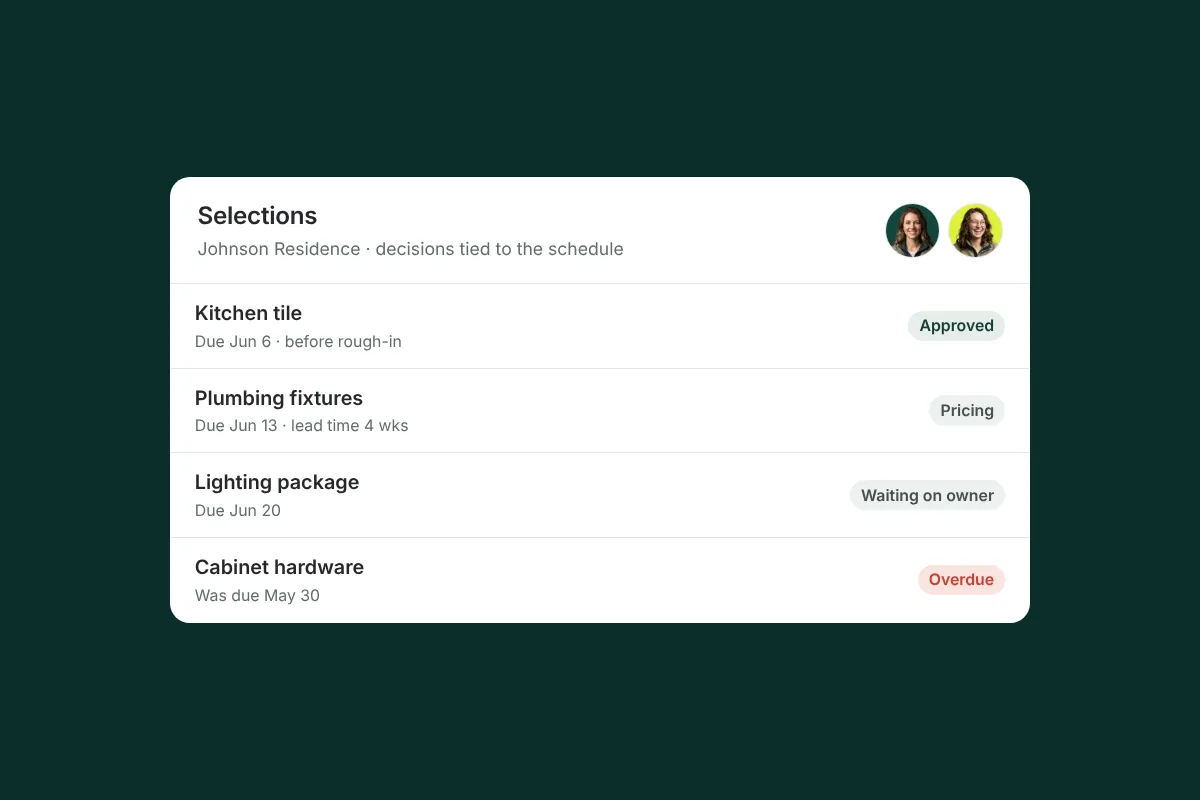
Decisions are their own category. On a custom build, you'll need hundreds of client decisions over the life of the project, from structural choices early on down to outlet placement and paint sheen at the end. Every decision that comes in late has the potential to delay something downstream. Build a decision log from day one and make sure clients know which decisions need to be made by when. When a client understands that their flooring selection needs to happen by a specific date or it will push the schedule, they take the deadline seriously. When it's just a loose item floating around in an email thread, it gets lost.
How to handle scope changes without damaging the relationship
Scope changes are going to happen on every custom build. A client walks the framing and decides they want the master closet bigger. They see a finish at their friend's house and want to upgrade. These requests are normal, and the way you handle them either builds trust or erodes it.
The key is having a clear, consistent change order process from the start. Before you build anything, tell your client exactly how changes work. If they want to modify the scope, they submit a request, you price it, they approve it in writing before any work happens. That's it. When the process is clearly established upfront, change orders don't feel like you're trying to squeeze more money out of them. They feel like a normal part of how decisions get made.
Document everything. Keep approvals in writing, not as a verbal agreement on a job site walk. Verbal agreements are where disputes are born. A centralized platform where clients can review and approve change orders digitally removes the ambiguity entirely. There's no "I thought you said it would only be a few hundred dollars" conversation when both parties have a signed approval with a dollar amount attached to it. Again, Ally to the rescue.
Common situations where expectations break down mid-build
Even with a solid pre-construction conversation and a good communication rhythm, there are a few specific points in a build where things tend to go sideways.
- Framing walkthrough: Clients often get stressed when they walk a framed house and rooms feel smaller than expected. This is extremely common. Rooms always look smaller when they're framed and unfinished than they do in drawings. Give clients a heads-up before the walkthrough so it doesn't catch them off guard.
- Punch list: The end of a project is emotionally charged. A homeowner who has been waiting months to move in will notice every imperfection. Walk the punch list with them, document every item, and set a clear timeline for completion. Don't let them move in with an open-ended list of unresolved items hanging over the relationship.
- Utility connections and final inspections: These are often outside your control but land on your lap anyway. Be proactive about communicating delays caused by utility companies or inspection scheduling. When clients hear it from you first, they're far more patient than when they feel like they had to drag the information out of you.
- Material substitutions: When a specified product is discontinued or backordered, you'll need to make a substitution. Always loop in the client before making the change, even if the substitution is equivalent or better. Making the call without telling them feels like a loss of control to a homeowner and creates unnecessary tension.
How to use technology to make communication more consistent
A lot of GCs rely on email threads and group texts to keep clients in the loop, and it works until it doesn't. By mid-project you've got decisions buried in email chains, approvals that were given verbally on a site visit, and a client who's frustrated because they can't find the answer to a question they asked two weeks ago. The volume of communication on a custom build is genuinely hard to manage without a system.
Purpose-built platforms for residential construction solve this problem by centralizing everything in one place. With Ally Project Management, client approvals, decisions, file sharing, change orders, and weekly reports all live in a single system. The average client approval time on the platform is around 5 minutes, and decision turnaround runs about three times faster than email. That kind of speed matters when a delayed decision is holding up your framing crew.
The platform also supports team tagging in comments, OAC meeting agendas, and a built-in client CRM, which means your whole team stays aligned and nothing falls through the cracks. For GCs managing multiple custom builds at once, that kind of structure isn't a luxury. It's how you stay sane. If you want to see how it fits your workflow, Ally offers a free 7-day trial with no long-term contract required. You can check out the details at allyprojectmanagement.com/pricing.
What the best GCs do differently when it comes to client relationships
The GCs who consistently finish custom builds with happy clients aren't necessarily the ones with the fanciest finishes or the lowest prices. They're the ones who treat communication as a deliverable just like framing or roofing. They show up to pre-construction meetings prepared. They send updates before clients ask for them. They document decisions and approvals every single time. And when something goes wrong, which it will, they call the client before the client notices.
Building a custom home is a long relationship. You'll spend more time with some clients than they spend with their own families during the build. The quality of that relationship, and the referrals that come from it, are directly tied to how well you managed expectations from day one. Get the communication right and the rest of the job gets a lot easier.
Ready to get started? Sign up for your free trial at allyprojectmanagement.com.
Related resources
Spreadsheet vs. Project Management Software for Small Residential Builders: When to Switch
An honest comparison of spreadsheets vs. construction project management software for small residential builders, and the signs it’s time to switch.

What to Tell a Homeowner When the Construction Schedule Gets Delayed
What to tell a homeowner when a construction schedule slips: a simple framework, sample scripts for each type of delay, and how to document the cause.
How to Keep Homeowner Selections Moving Without Losing Track of What Was Approved
Homeowner selections stall when nobody owns the decision. Set a deadline tied to the schedule, record exactly what was approved and its cost impact.
Get started with Ally
Start with one project and expand as your business grows. No hidden fees, no long-term contracts.