
What to Tell a Homeowner When the Construction Schedule Gets Delayed

Summary
Tell the homeowner early, explain the cause plainly, give the new date and its effect on cost and the rest of the schedule, and say what you’re doing about it. Then document why the schedule slipped and who owned the decision behind it, so the record is clear later.
On this page
When a construction schedule slips, tell the homeowner as soon as you know, not when they notice. Explain the cause in plain language, give the new expected date, describe any effect on cost or later phases, and say what you’re doing to recover. Then document why it slipped and who owned the decision or task behind it. Early, specific and documented beats late and vague every time.
- Bad news gets worse with age: share delays as soon as they’re reasonably certain.
- Use the same five-part structure every time: what happened, why, new date, impact, next steps.
- Be factual about owner-caused delays without blaming; the record should speak for itself.
- Write it down in the project record, not just a phone call or text.
Why delays damage trust (and how to prevent that)
Homeowners rarely lose trust because a schedule slipped. Weather, inspections and supply chains are part of building a house. They lose trust when they find out late, when the explanation keeps changing, or when they can’t tell whether the delay was avoidable. A consistent way of communicating delays — and a record of what caused them — keeps the conversation about the facts instead of about the relationship.
It also protects you. On a custom home, delays often trace back to a late decision, a design change or an unforeseen condition. If the cause and responsibility aren’t documented when it happens, they’re much harder to establish later.
A five-part framework for delay updates
- What happened. One or two sentences, no jargon.
- Why. The cause, stated factually: weather, a supplier, an inspection, a decision that’s still open.
- New expected date. For the affected task and, if it moves, for the milestones the owner cares about.
- Impact. Any effect on cost, on other phases, or on decisions the owner now needs to make sooner.
- Next steps. What you’re doing to recover, and what (if anything) you need from them.
Sample scripts for common delays
Adapt the wording to your voice and the specifics of the project. These are written as short written updates; the same structure works for a call, followed by a written summary.
Weather
“Heavy rain this week kept us from pouring the garage slab, which needs dry conditions to cure properly. We’re now planning to pour next Tuesday, weather permitting. That moves the garage framing back about a week, but it doesn’t change the dry-in target for the house. We’ll confirm the pour date on Monday.”
Materials or supplier delays
“The window manufacturer has pushed delivery from March 3 to March 24. We confirmed the order and the new date with them directly this morning. We’re resequencing interior framing and rough-ins so crews stay productive while we wait, which keeps the overall delay to about two weeks. We’ll update you if anything changes and as soon as the windows ship.”
Inspections
“The rough electrical inspection noted two corrections. Our electrician is making them tomorrow and we’ve requested a re-inspection for Thursday. Insulation will start the day after it passes, so we expect about a three-day shift. There’s no change to cost.”
Owner decisions that are late
This is the hardest one to say well. Keep it factual and forward-looking, and make sure the decision deadline was communicated in advance.
“To keep tile on schedule, we needed the primary bath tile and layout selected by October 1, so the tile could be ordered and delivered before the setter starts. We don’t have a final selection yet. Based on current lead times, if we can lock it in by this Friday, tile installation moves back about two weeks and the rest of the interior schedule follows. If it’s later than Friday, we’ll need to re-sequence again. Can we set a time this week to finalize it together?”
Notice what that script does: it references the deadline that was set, states the consequence plainly, and offers help. It doesn’t accuse. If the decision has cost implications (for example, expedited shipping or a return trip for a trade), say so and document it as you would any other change. Whether that’s a change order or a budget revision depends on your contract; see change orders vs. budget revisions.
Design changes or unforeseen conditions
“When we opened the wall for the new kitchen opening, we found an undersized beam that the engineer wants upgraded. We’ve asked for revised details and expect them Wednesday. We’ll send pricing and the schedule impact for your approval once we have them; until then, we’re continuing work in the other areas of the house.”
How to document a schedule delay
A phone call smooths the moment. A written record protects everyone afterward. For every meaningful delay, record:
| Item | Example |
|---|---|
| Task or milestone affected | Primary bath tile installation |
| Original and new dates | Oct 20 → Nov 3 (expected) |
| Cause | Tile selection not finalized by the agreed deadline |
| Who owned the decision or task | Owner (selection); deadline communicated Aug 15 and Sep 20 |
| Cost impact, if any | None expected; expedited shipping would add cost if needed |
| Downstream effects | Vanity top template and plumbing trim move with tile |
| Who was notified and when | Owner and architect, Oct 2 |
The “who owned it” line is not about blame. It’s about accountability: everyone should be able to see who was responsible for the decision or task that moved the date. That’s far easier when decisions and approvals are documented as they happen; see how to properly document owner approvals.
This is general information, not legal advice; check your contract and state law for any notice requirements and time-extension provisions.
How to prevent delay conversations from becoming disputes
The best delay conversation is the one the owner saw coming. A few practices make delays easier to discuss when they happen:
- Share decision deadlines up front. When every selection has a “decide by” date tied to the schedule, a late decision is a known risk rather than a surprise.
- Give the owner access to the schedule. An owner who can see the current schedule understands why a slipped delivery matters.
- Flag risks before they become delays. “The window supplier is warning about longer lead times” two months out is far easier than “the windows are late” on the delivery date.
- Review the schedule in every OAC meeting. A standing agenda item keeps everyone aware of what’s at risk; see how to run an effective OAC meeting.
- Separate cost from blame. If a delay changes cost, document it the way your contract requires, calmly and promptly, rather than letting it build up into a dispute at the end.
Mistakes to avoid
- Waiting until you have a perfect answer. Share what you know, say when you’ll know more.
- Over-promising the recovery. A second slip hurts more than a conservative first estimate.
- Burying the delay in a long update. Lead with it.
- Only calling. Follow every call with a short written summary in the project record.
- Blaming trades or suppliers by name to the owner. You chose them; own the solution.
How Ally helps you communicate delays
In Ally, the schedule the homeowner sees is the same one your team works from, so a moved date is visible to everyone instead of buried in a message thread. Owners can check status and timelines themselves, which means fewer surprises and fewer “where are we?” calls.
Because selections and approvals live in the same project, each decision has a clear record of when it was requested, what was decided and when. That makes delay conversations factual. See how Ally’s scheduling and coordination keeps owners informed.
Frequently asked questions
How do you tell a client their project is delayed?
Tell them early, in writing, using a consistent structure: what happened, why, the new expected date, any cost or schedule impact, and what you’re doing about it. Follow any phone call with a short written summary so there’s a record.
What should a construction delay letter to a homeowner include?
The affected work, the cause, original and new dates, effects on cost and later phases, decisions now needed from the owner, and your recovery plan. Check your contract for any required notice format or timing.
How do you handle delays caused by the homeowner?
Stay factual. Reference the decision deadline that was communicated, explain the consequence, and offer to help finalize the decision. Document the cause and any cost impact using the process your contract calls for.
Should you tell a homeowner about a delay before you know the new date?
Usually, yes. Say what you know, what you’re waiting on and when you’ll update them. Owners handle uncertainty better than surprises.
How often should you update homeowners on the schedule?
At least weekly on an active project, plus immediately when a meaningful date moves. A shared schedule the owner can check reduces how often you need to send updates.
See how Ally keeps owners informed when the schedule moves: book a demo.
Related resources
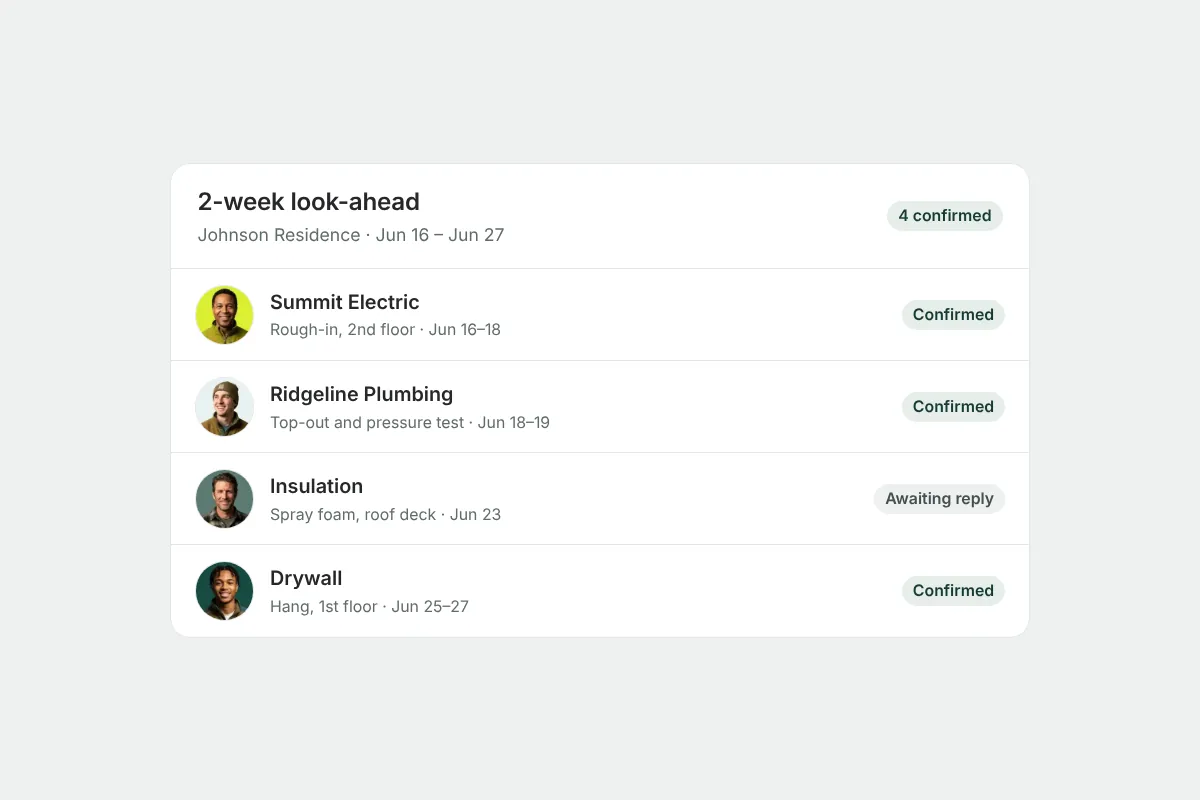
How to Coordinate Subcontractors So Trades Show Up When You Need Them
How to coordinate subcontractors on a custom home: confirmations, a two-week look-ahead schedule, change notifications and clear ownership so trades show up.

How to Run an Effective Owner–Architect–Contractor (OAC) Meeting on a Custom Home
How to run an OAC meeting on a custom home: a standing agenda, owners and due dates for every open item, carry-forward items and minutes the whole team uses.

How to Build a Residential Construction Schedule
How to build a residential construction schedule: phase sequencing, lead times, buffer, selection deadlines, and a sample custom home timeline by phase.
Get started with Ally
Start with one project and expand as your business grows. No hidden fees, no long-term contracts.