
How to Evaluate Subcontractor Bids Beyond Price (and How Many to Get)
Summary
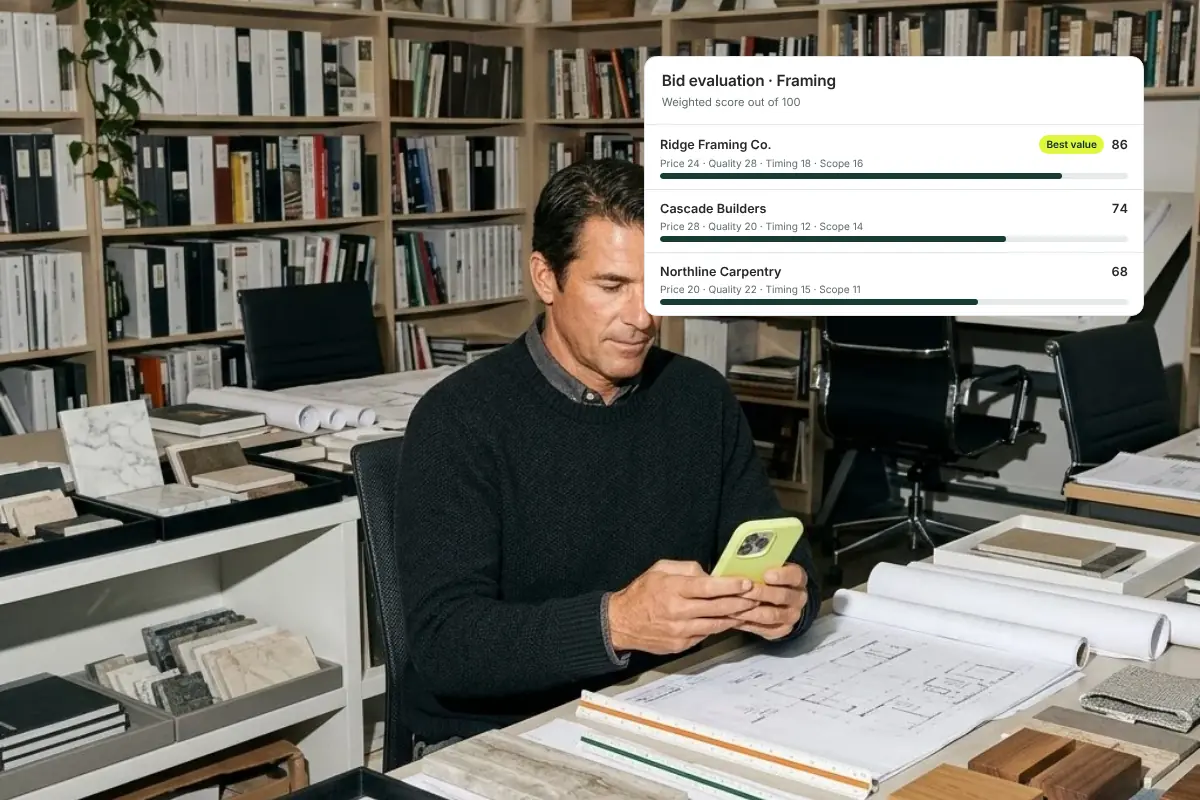
There’s no fixed number of bids every trade needs. Get the number of qualified bids that the scope, market and project requirements call for, then evaluate them on reputation, relationship, availability, quality, client fit and scope completeness alongside price. A simple weighted score makes the decision clear and easy to explain.
On this page
How many bids should a contractor get? Enough qualified bids to understand the market price and choose a capable sub, which depends on the scope, the local market and the project’s requirements. A specialty trade with two qualified firms in your area may only get two; a large framing package may justify more. Then evaluate the bids on more than price.
- There’s no universal number of bids. The right number depends on scope, market and project requirements.
- Only qualified bidders count. A bid from a sub you wouldn’t hire isn’t a useful data point.
- On custom homes, the lowest bid is often not the best value once quality, timing and scope gaps are considered.
- A weighted score turns judgment into a decision you can explain to your team and the owner.
- Record why you chose the sub you did. That record is part of accountability on a cost-plus project.
How many bids should you get?
Rules of thumb like “always get three bids” are simple to follow and often wrong for custom residential work. A better approach is to decide the number per trade, based on a few factors.
Scope size and complexity
A $250,000 mechanical package with a complex system deserves more competition and scrutiny than a $6,000 gutter install. As the dollar value and the technical risk go up, so does the value of another qualified bid.
Your local market
In some markets, there are only one or two firms qualified for high-end architectural metalwork, plaster or custom millwork. Forcing a third bid from someone who isn’t qualified adds work without adding information. In busy markets, some good subs won’t bid at all, so you may need to invite more to get enough responses.
Project and owner requirements
Some owners, lenders or contracts require a minimum number of bids, or require competitive bidding above a dollar threshold. On cost-plus work, owners reasonably want to know the price is fair, so documenting the bidding process matters even when the requirement isn’t written down.
Your relationship with a trusted sub
Many custom builders negotiate certain trades with long-standing subs whose quality and reliability they know. That’s legitimate, especially when timing or quality is critical. On cost-plus work, be open with the owner about it and be ready to show the price is in line with the market.
What should you evaluate besides price?
On a high-end custom home, the cheapest number can become the most expensive choice. These are the criteria experienced builders weigh.
- Reputation. What other builders, suppliers and inspectors say about the sub’s work and how they handle problems.
- Relationship. Your history with them: communication, honesty about mistakes, willingness to come back for warranty work.
- Availability and timing. Can they start when the schedule needs them, and do they have the crew size to finish on time?
- Quality of work. Workmanship on comparable homes. Visit a recent job if you haven’t worked together before.
- Typical client base. A sub who mostly works on production homes may struggle with the expectations and tolerances of a high-end custom build, and the reverse can be true on price.
- Scope completeness. How well the bid covers the actual scope. A low bid with three exclusions isn’t low.
- Price. After leveling, so you’re comparing equivalent work. See how to send RFPs and compare bids for the leveling method.
Compliance (license, insurance and signed agreements) isn’t a scoring criterion. It’s a gate. A sub who can’t meet it shouldn’t be scored at all. Our subcontractor prequalification checklist covers what to collect.
Weighted scoring example
A weighted score makes the trade-offs visible. Assign each criterion a weight that reflects what matters most on this job (the weights below add up to 100), score each bidder from 1 to 5, and multiply. The example is for a finish carpentry package on a high-end home; the weights and scores are illustrative.
| Criterion | Weight | Bidder A | Bidder B | Bidder C |
|---|---|---|---|---|
| Quality of work | 25 | 5 (125) | 3 (75) | 4 (100) |
| Price (leveled) | 20 | 3 (60) | 5 (100) | 4 (80) |
| Availability and timing | 15 | 4 (60) | 3 (45) | 5 (75) |
| Scope completeness | 15 | 5 (75) | 2 (30) | 4 (60) |
| Reputation | 10 | 5 (50) | 3 (30) | 4 (40) |
| Relationship | 10 | 5 (50) | 2 (20) | 3 (30) |
| Typical client base | 5 | 5 (25) | 2 (10) | 4 (20) |
| Weighted total (max 500) | 100 | 445 | 310 | 405 |
Bidder B has the best price but the weakest scope coverage and the least relevant experience. Bidder A scores highest overall. Bidder C is close and available sooner, which could matter if this package sits on the critical path. The score doesn’t make the decision for you; it shows why you made it.
Adjust the weights by trade. For a waterproofing or roofing package, quality and reputation may deserve more weight. For a simple package with several equally qualified subs, price may reasonably carry more.
Lowest bid vs. best value
On fixed-price public work, the lowest responsible bid often wins by rule. On private custom homes, you’re choosing a partner for months of work in someone’s home. The best-value bid is the one that gives the owner the finished result they expect, on the schedule they’re counting on, at a fair price. If you choose a bidder who isn’t the lowest, write down why. On a cost-plus job, that note becomes part of the transparency the owner is paying for.
How to explain the choice to the owner
On cost-plus projects, owners often ask why a bid wasn’t the cheapest. A short summary goes a long way: the leveled totals, the scoring, and one or two sentences on the deciding factors. It shows the decision was made deliberately, and it keeps the owner, the architect and your team working from the same information.
How Ally supports bid evaluation
Ally collects every vendor’s response to an RFP in one place, so comparing bids doesn’t start with downloading attachments from separate email threads. You can review responses side by side, award the bid, and the awarded amount flows into the project budget automatically. The bid history stays with the project, so the reasoning is there if the owner asks later. See vendor and bid management in Ally.
Frequently asked questions
How many bids should a contractor get?
There’s no fixed number. Get enough qualified bids to understand the market price and choose a capable sub, based on the size and complexity of the scope, how many qualified firms work in your market, and any owner, lender or contract requirements. A specialty trade may only have two qualified bidders; a large package may justify more.
How do you evaluate subcontractor bids?
Level the bids so they cover the same scope, confirm each bidder meets your license and insurance requirements, then weigh price alongside quality, availability, scope completeness, reputation, your working relationship and fit with high-end custom work. A weighted scoring table makes the trade-offs clear and easy to explain.
Should I always choose the lowest bid?
Not on custom homes. The lowest bid can hide scope gaps, slower availability or a quality level that doesn’t match the project. Compare leveled bids and weigh the other criteria. If you choose a higher bid, record the reasons, especially on cost-plus work where the owner is paying actual cost.
What are good subcontractor bid evaluation criteria?
Common criteria are quality of work, leveled price, availability and timing, scope completeness, reputation, your relationship with the sub, and experience with clients like yours. License, insurance and signed agreements are a pass-or-fail gate before scoring, not criteria to trade off.
Is it OK to negotiate with one sub instead of bidding?
Yes, many custom builders negotiate trades with trusted subs, especially when quality or timing is critical. On cost-plus projects, tell the owner and be ready to show the price is in line with the market, for example from recent bids on similar work. Check whether your contract requires competitive bids above a threshold.
See how Ally keeps bids, awards and the budget together: book a demo.
Related resources
How to Vet Subcontractors and Track Insurance, Contracts and Compliance Documents
A subcontractor prequalification and compliance checklist for residential builders: licenses, COIs, W-9s, subcontracts, lien waivers and expiration tracking.
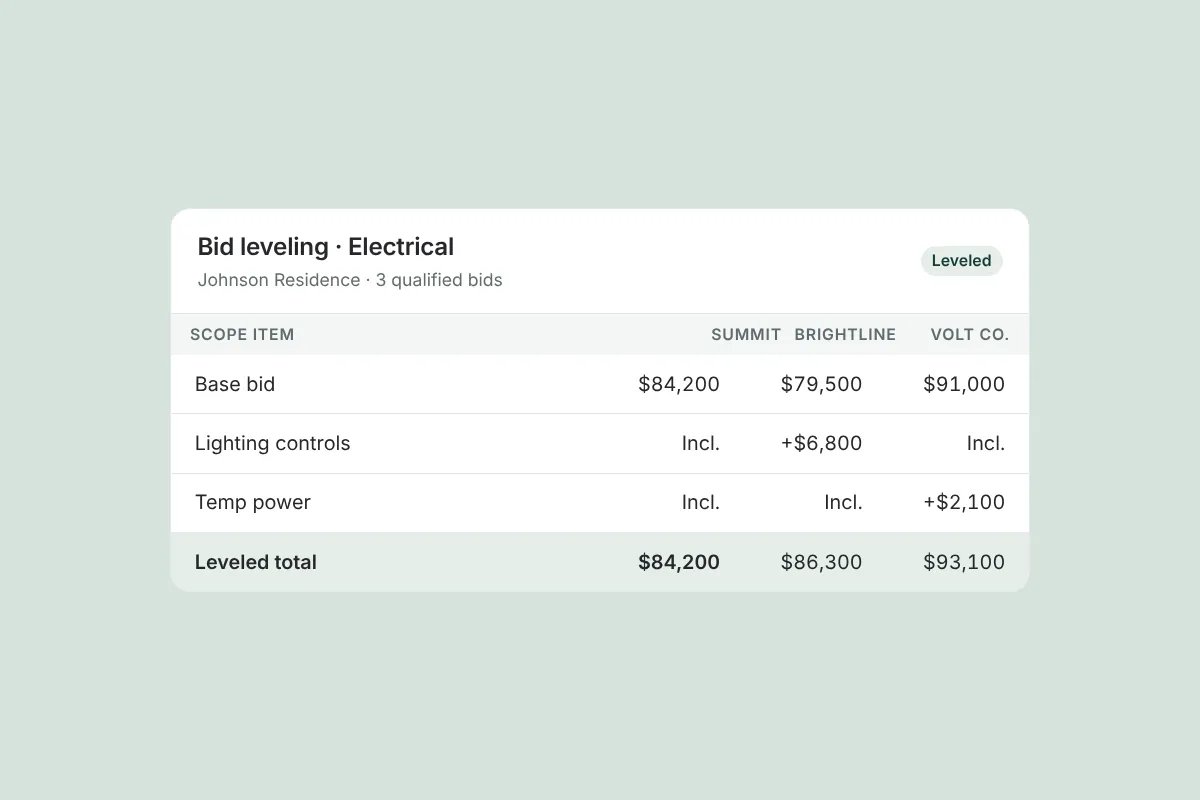
How to Send RFPs to Subcontractors and Compare Bids
A step-by-step bid process for residential builders: write a clear scope, send one RFP to every sub, level the bids line by line and award with confidence.
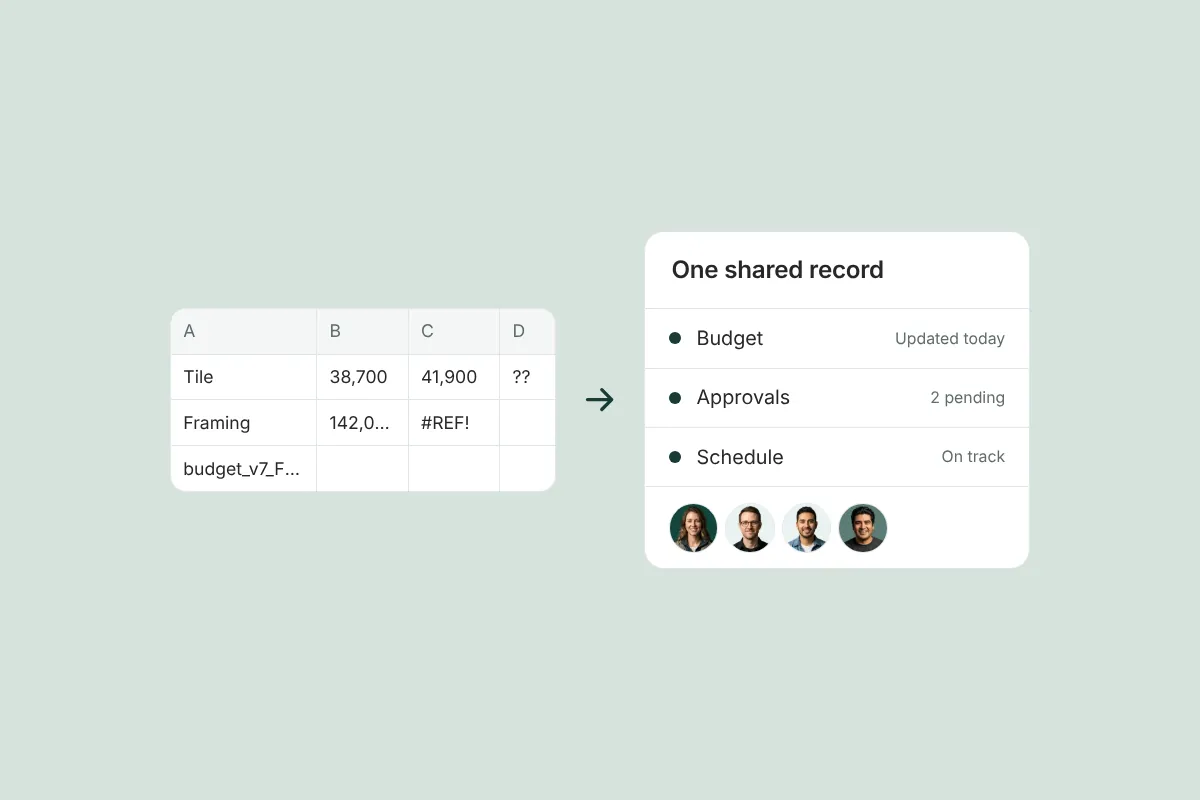
Spreadsheet vs. Project Management Software for Small Residential Builders: When to Switch
An honest comparison of spreadsheets vs. construction project management software for small residential builders, and the signs it’s time to switch.
Get started with Ally
Start with one project and expand as your business grows. No hidden fees, no long-term contracts.