
How to Send RFPs to Subcontractors and Compare Bids
Summary
Comparable bids start with a clear scope and a standard bid form. Send the same package to every qualified subcontractor, require inclusions and exclusions in a consistent format, then level the responses line by line before comparing totals. The lowest number is often the least complete one.
On this page
To compare subcontractor bids fairly, send every bidder the same scope package and a standard bid form, ask each one to list inclusions and exclusions in the same format, then level the bids: adjust each total for missing scope and alternates so you’re comparing equivalent work. Compare totals only after leveling.
- Most bid comparison problems start with an unclear scope, not with the bidders.
- A standard bid form with required line items makes bids comparable before they arrive.
- Leveling means adjusting each bid for scope gaps so totals are apples to apples.
- Record why you awarded the bid, not just to whom, so the owner and your team can see the reasoning.
- The awarded amount should flow straight into the project budget as committed cost.
Why bid comparison gets hard on custom homes
On a custom home, a single trade package can include dozens of decisions: fixture counts, specified products, allowances, finish levels and coordination with other trades. When five subcontractors each read the drawings a little differently, five bids arrive in five formats, each with its own assumptions.
The usual result is a pile of PDFs and email threads, and an evening spent copying numbers into a spreadsheet to figure out who actually bid the same work. That manual compiling is where mistakes happen: a missed exclusion, an outdated drawing set, or a bid that looked low because it left something out.
A repeatable process fixes most of this before the bids come back.
How to send an RFP to subcontractors, step by step
Step 1: Define the scope in writing
Write a scope of work for the trade that names the drawings and specifications by revision date, lists what’s included, and calls out what’s specifically excluded or handled by others. Be explicit about the items that commonly fall between trades: who supplies and who installs, who patches, who handles permits and inspections, and who cleans up.
Step 2: Build a standard bid form
Give bidders a form with the line items you want priced separately. For a plumbing package, that might be rough-in, fixtures (or a fixture allowance), water heater, gas piping, permits and alternates. Ask for unit prices where quantities may change, and for lead times on long-lead items.
Step 3: Send one complete package to every bidder
Every bidder should receive the same drawings, specifications, scope, bid form and due date. If you issue an addendum, send it to everyone. Mismatched packages are the fastest way to get bids you can’t compare.
Step 4: Track questions and answers in one place
When a bidder asks a question that affects scope, answer it for all bidders. Keep the questions and answers with the bid package so the award decision has a record behind it.
Step 5: Collect bids on the due date
Follow up with bidders who haven’t responded before the deadline, not after. Note who declined and why; that information is useful the next time you build a bidder list.
Step 6: Level the bids
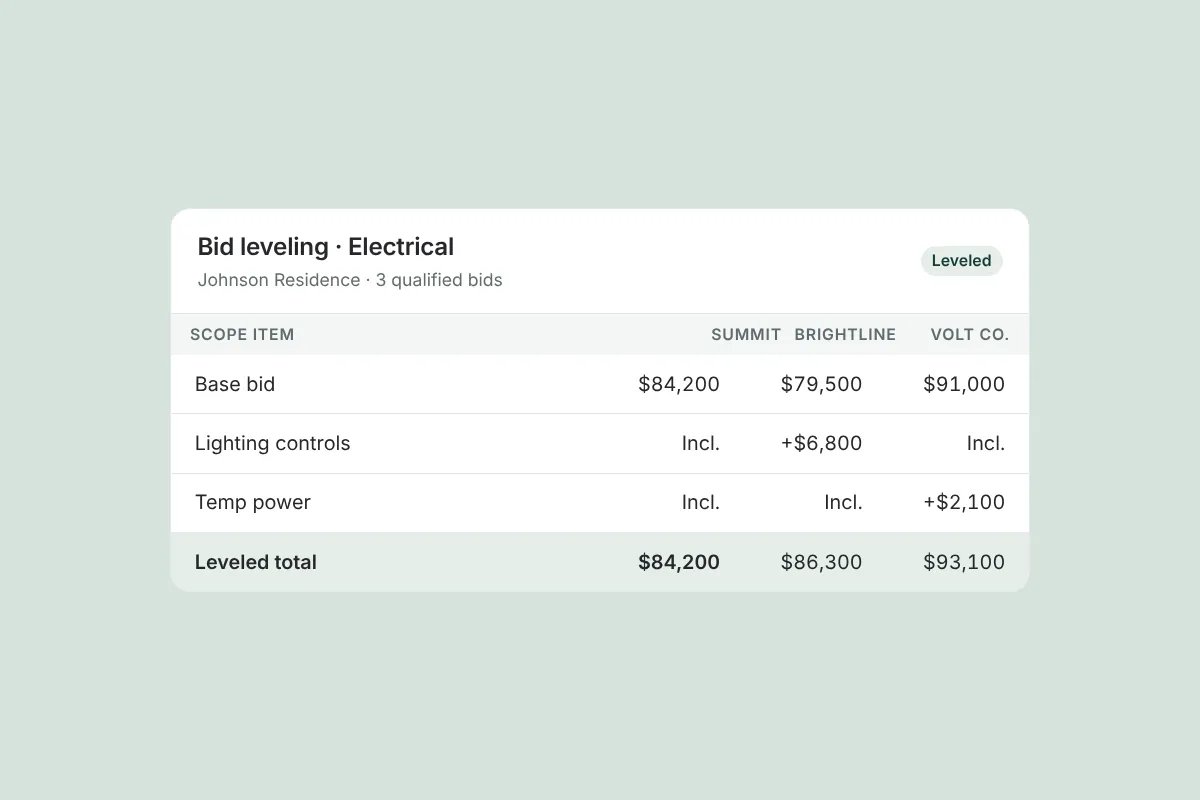
Bid leveling means adjusting each bid so all of them represent the same scope. Walk through each line item and exclusion. If one bidder excluded permits and the others included them, add a realistic permit cost to that bid for comparison. If one bid includes a higher-spec fixture, note it. Only compare totals once every bid covers the same work.
Step 7: Evaluate beyond price and award
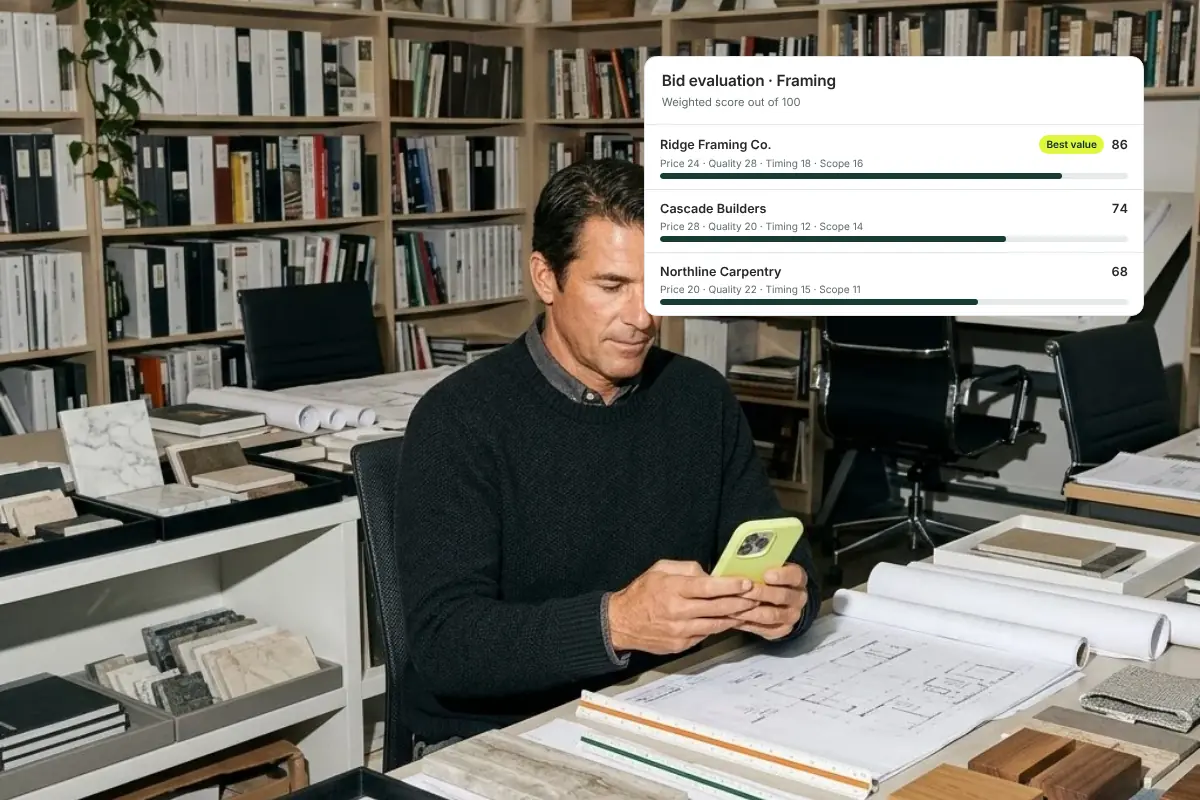
Price matters, but so do schedule availability, quality, reliability and how well the bidder understood the scope. Our guide on evaluating subcontractor bids beyond price includes a weighted scoring method. Record why you chose the winning bid, then issue the subcontract.
Step 8: Commit the award to the budget
The awarded amount becomes committed cost on that cost code. If it differs from the budget, record the difference as a budget revision with the bid as backup, so the owner sees the updated projected final cost. See change orders vs. budget revisions for why that’s usually a revision, not a change order.
Bid-leveling template
Here’s a simple leveling table for a plumbing package. The numbers are an example. The point is the structure: every bid on the same lines, with adjustments shown openly.
| Line item | Bidder A | Bidder B | Bidder C |
|---|---|---|---|
| Rough-in, per drawings rev. 3 | $48,000 | $44,500 | $51,200 |
| Fixture installation (owner-selected fixtures) | $9,800 | $8,600 | $10,400 |
| Water heaters (2), supplied and installed | $7,200 | Excluded | $6,900 |
| Gas piping | $5,400 | $5,100 | Included in rough-in |
| Permits and inspections | Included | Excluded | Included |
| Bid total as submitted | $70,400 | $58,200 | $68,500 |
| Leveling: add water heaters (estimate) | – | +$7,100 | – |
| Leveling: add permits (estimate) | – | +$2,400 | – |
| Leveled total | $70,400 | $67,700 | $68,500 |
| Lead time to start | 3 weeks | 6 weeks | 2 weeks |
| Notes | Matches spec | Two exclusions; confirm capacity | Gas folded into rough-in |
Bidder B looked $10,000 to $12,000 cheaper as submitted. After leveling, the spread is under $3,000, and Bidder B’s six-week start may cost more in schedule than it saves. That’s the conversation leveling makes possible.
What should a bid form include?
- Project name, address and bid due date
- Drawing and specification list with revision dates
- Scope of work, inclusions and named exclusions
- Required line items, unit prices and alternates
- Allowances you want carried, stated as amounts
- Lead times and earliest start date
- Bid validity period
- Insurance and licensing requirements (see subcontractor prequalification and compliance)
- Bidder’s signature and date
Spreadsheet vs. bid management software
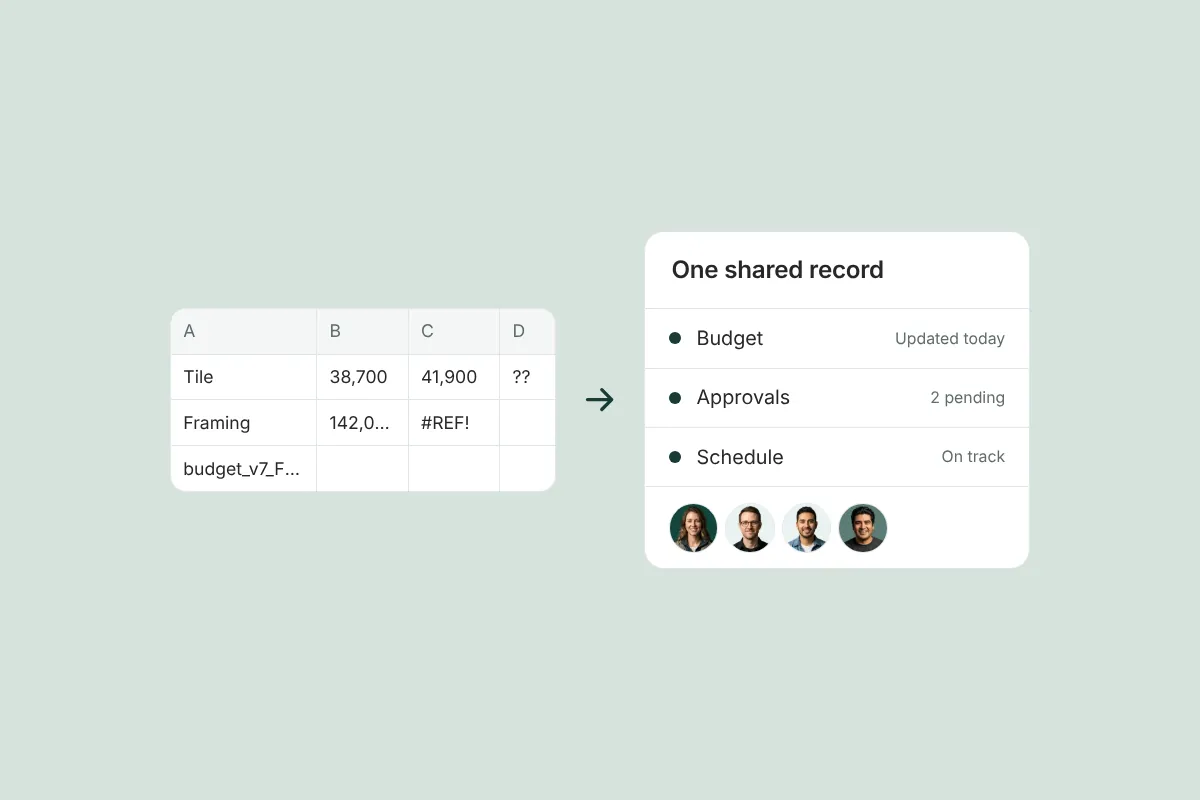
A bid-leveling spreadsheet works for a single package. It gets harder when you’re running bids on ten trades across several jobs: tracking who received which addendum, who hasn’t responded, and which version of the drawings each bid is based on. That’s usually the point where builders move bidding into the same system as the budget, so an awarded number doesn’t have to be re-typed somewhere else.
How Ally handles RFPs and bid comparison
In Ally, you send one detailed RFP or invitation for bid, with drawings, scope and requested options, to every vendor on your list at once, instead of one email at a time. Responses land in the same place, so comparing vendors and awarding the bid doesn’t mean digging through threads or downloading and compiling attachments by hand.
Once you award a bid, it flows into the project budget, so the committed cost is current and the owner’s view of the budget reflects it. Learn more about vendor and bid management in Ally.
Frequently asked questions
How do you compare subcontractor bids?
Make sure every bidder priced the same scope from the same documents, then level the bids: list each bid’s line items side by side, adjust for exclusions and alternates so they cover equivalent work, and compare the leveled totals. Then weigh schedule, quality and reliability alongside price before you award.
What is bid leveling in construction?
Bid leveling is the process of adjusting subcontractor bids so they can be compared fairly. You identify what each bid includes and excludes, add estimated costs for missing scope or remove extras, and arrive at totals that represent the same work. Leveling shows the real price difference between bidders.
How do I send an RFP to subcontractors?
Prepare a scope of work, the current drawings and specifications, a standard bid form and a due date. Send the identical package to every qualified bidder, answer questions for everyone, issue addenda to all bidders, and follow up before the deadline. Keep the package and the responses together.
What’s the difference between an RFP and an IFB?
Builders use the terms loosely. An invitation for bid (IFB) usually asks for a price on a defined scope. A request for proposal (RFP) may also invite the bidder to propose methods, alternates or a schedule. On residential work, the important part is the same either way: a clear scope and a consistent format.
Do I need bid management software?
Not for a single job with a few trades. It becomes worthwhile when you’re bidding many packages across several projects, need every bidder to receive the same addenda, and want awarded bids to update the budget without re-entry. The deciding factor is usually how much time goes into compiling and re-keying bids.
See how Ally sends one RFP to every vendor and keeps the responses together: book a demo.
Related resources
How to Vet Subcontractors and Track Insurance, Contracts and Compliance Documents
A subcontractor prequalification and compliance checklist for residential builders: licenses, COIs, W-9s, subcontracts, lien waivers and expiration tracking.
How to Evaluate Subcontractor Bids Beyond Price (and How Many to Get)
How many subcontractor bids should you get, and how do you choose beyond price? A practical guide with a weighted scoring example for custom home builders.
Spreadsheet vs. Project Management Software for Small Residential Builders: When to Switch
An honest comparison of spreadsheets vs. construction project management software for small residential builders, and the signs it’s time to switch.
Get started with Ally
Start with one project and expand as your business grows. No hidden fees, no long-term contracts.