
How to Vet Subcontractors and Track Insurance, Contracts and Compliance Documents

Summary
Vet subcontractors before they bid: license, insurance, references and capacity. Once they’re on a job, keep their compliance documents current, especially certificates of insurance, which expire. An expired COI can leave the builder carrying the risk of the sub’s work, so expiration dates need tracking, not filing.
On this page
- Why prequalification matters on custom homes
- Subcontractor prequalification checklist
- What compliance documents should you track?
- What’s the risk of an expired certificate of insurance?
- How to track COIs and expiration dates
- Keep a rated subcontractor database
- How Ally keeps vendor documents with the vendor
- Frequently asked questions
To vet a subcontractor, confirm their license, insurance, references and capacity before they bid, then keep their compliance documents current for as long as they’re on your jobs. The documents to collect are a certificate of insurance, W-9, license, signed subcontract and lien waivers with each payment. Track expiration dates actively, because an expired certificate can leave you exposed.
- Prequalify before inviting a sub to bid. It saves time and protects the owner.
- Certificates of insurance expire. Filing them isn’t enough; you need to track the dates.
- Keep each vendor’s documents with the vendor, so anyone on your team can see what’s current.
- Lien waivers belong with each payment, and they tie directly to your pay applications.
- Requirements vary by state and contract. Check what yours require.
Why prequalification matters on custom homes
On a high-end custom home, a sub’s mistakes land in the owner’s house and your reputation. A sub who isn’t properly licensed or insured can create problems that have nothing to do with the quality of their work: failed inspections, uncovered damage, payment claims, or an injury on site with no coverage behind it.
Prequalification moves those questions to the start of the relationship, before the sub is in your bid list, rather than after something goes wrong.
Subcontractor prequalification checklist
Collect and verify these before a new sub bids on your work, and refresh them periodically for subs you use regularly.
Business and licensing
- Legal business name, address and contacts
- Contractor or trade license number, verified with the issuing agency, with expiration date
- Any specialty certifications the trade requires (for example, manufacturer certification for a roofing system)
- W-9 on file
Insurance
- Certificate of insurance showing general liability, auto and workers’ compensation (or a valid exemption where the law allows it)
- Limits that meet your requirements and your prime contract’s
- Your company (and the owner, if required) named as additional insured where your agreements call for it
- Policy expiration dates recorded
Experience and capacity
- Two or three references from builders or owners on comparable homes
- Examples or visits of recent work at your quality level
- Crew size and current workload: can they staff your job when the schedule needs them?
- How they handle warranty callbacks
Agreements
- Master subcontract agreement signed, or a project subcontract for each job
- Safety expectations acknowledged
- Payment terms and lien waiver requirements understood
What compliance documents should you track?
| Document | Why you need it | When to collect | Expires? |
|---|---|---|---|
| Certificate of insurance (COI) | Shows the sub carries the coverage your agreements require | Before work starts; again at every renewal | Yes, at each policy’s expiration |
| W-9 | Tax reporting for payments you make to the sub | Before the first payment | No, but update if the business changes |
| License | Confirms the sub can legally perform the work | At prequalification | Yes, usually on a renewal cycle |
| Signed subcontract | Scope, price, terms, insurance and indemnity requirements | Before work starts | Per project or per master agreement term |
| Lien waivers | Show the sub has been paid for work covered by each payment | With each payment (conditional and unconditional forms where your state uses them) | Tied to each payment |
Lien waivers are where compliance meets billing. On cost-plus projects especially, owners and lenders often expect waivers to back up each pay application. Our guide to preparing accurate, fully documented pay applications covers how to include them, and collecting and tracking lien releases goes deeper on the process.
What’s the risk of an expired certificate of insurance?
A certificate of insurance is a snapshot. It shows coverage on the date it was issued. When the policy expires and the sub doesn’t renew, or renews with different limits, the certificate in your file still looks fine.
If something happens while the sub’s coverage has lapsed, such as property damage, an injury or a defect claim, the claim may land on your policy instead. That can mean higher premiums, a deductible you pay, or a gap your own coverage doesn’t fill. Some workers’ compensation audits also charge the general contractor premium for payroll paid to uninsured subs. The specifics depend on your policies, your contracts and your state. This is general information, not legal advice; check your contract and state law.
The fix is simple but needs discipline: track every policy’s expiration date, request renewals before the date, and don’t schedule a sub whose coverage has lapsed.
How to track COIs and expiration dates
- Record expiration dates, not just files. A folder of PDFs doesn’t tell you what expires next month.
- Request renewals ahead of time. Ask for updated certificates 30 days or so before expiration.
- Check before scheduling. Make current insurance a condition of putting a sub on the schedule.
- Check before paying. Pair payment with a current COI and the right lien waiver.
- Keep one source of truth. The office, project managers and anyone scheduling trades should all see the same status.
Keep a rated subcontractor database
Beyond compliance, keep notes on how each sub performs: quality, reliability, communication and how they handled problems. Rate them after each job. Over time, that record makes bidder lists stronger and helps new project managers make good choices. It also feeds directly into evaluating subcontractor bids beyond price.
How Ally keeps vendor documents with the vendor
In Ally, each vendor has its own record, and the documents that belong to that vendor are stored with it: insurance certificates, W-9s, licenses and the vendor’s signed master subcontract. Vendor records also carry a rating and notes, so your rated subcontractor database lives in the same place as your bid list. Your whole team works from the same vendor information instead of hunting through inboxes and shared drives. Bills record whether a lien release is required and signed, which supports your pay applications. Expiration dates still need a habit: note each policy’s renewal date and check it before scheduling or paying a sub. Learn more about vendor and bid management in Ally.
Frequently asked questions
How do you vet a subcontractor?
Verify their license with the issuing agency, get a certificate of insurance showing the coverage and limits you require, call references from comparable projects, look at recent work, and confirm they have the crew and availability for your schedule. Have them sign your subcontract terms before they start.
What should be on a subcontractor prequalification checklist?
Business details and W-9, verified license and expiration date, certificate of insurance with required coverage and limits, references, examples of comparable work, crew capacity and current workload, warranty practices, and a signed master or project subcontract. Refresh the checklist periodically for subs you use repeatedly.
How do contractors track certificates of insurance?
Record each policy’s expiration date with the vendor, request renewals before they expire, and check coverage before scheduling or paying the sub. Keeping documents with each vendor record, rather than in scattered folders, lets everyone on the team see whether a sub is currently compliant.
What happens if a subcontractor’s insurance expires?
If a loss occurs while the sub is uninsured, the claim may fall on the general contractor’s policy, and insurance audits may charge you premium for uninsured subs’ payroll. Exact consequences depend on your policies, contracts and state law. Don’t schedule or pay a sub until a current certificate is on file.
Which documents do I need from a subcontractor?
At minimum: a certificate of insurance, W-9, license information, a signed subcontract, and lien waivers with each payment. Some projects also require safety documentation, bonds or specific endorsements. Your prime contract and state law may add requirements.
See how Ally keeps vendors, documents and bids in one place: book a demo.
Related resources
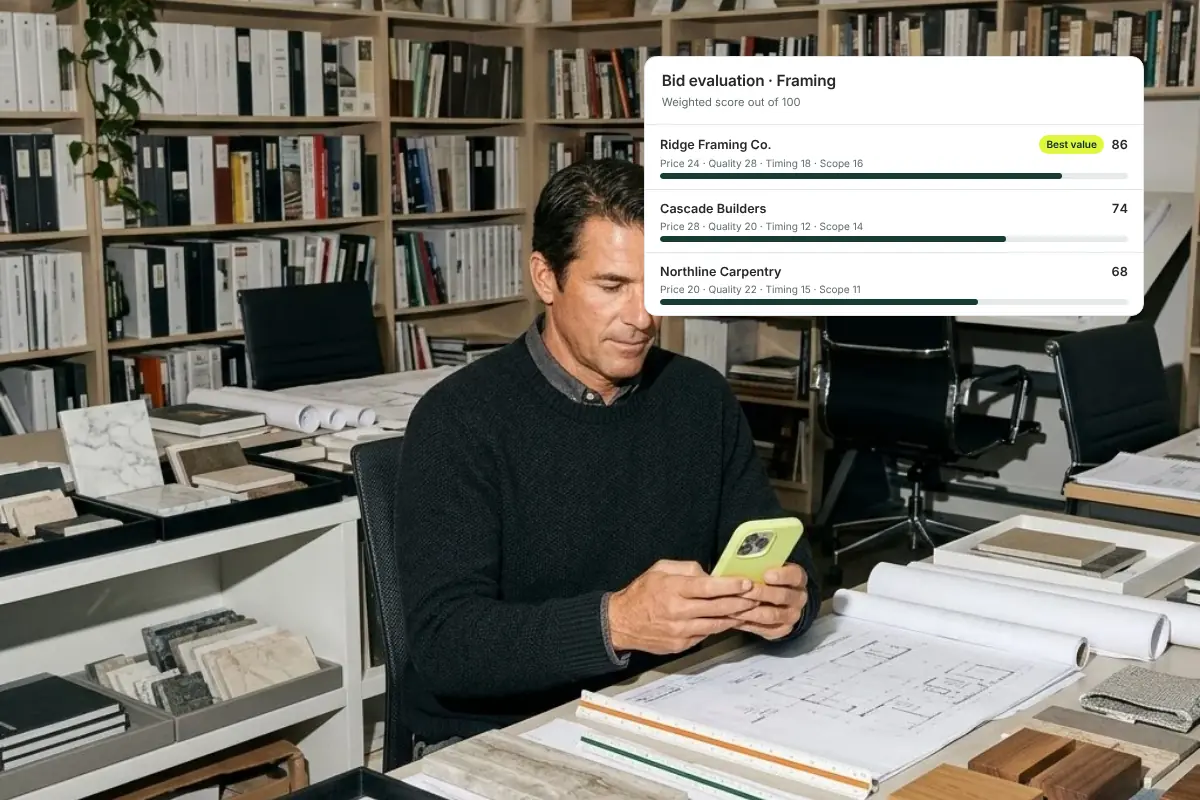
How to Evaluate Subcontractor Bids Beyond Price (and How Many to Get)
How many subcontractor bids should you get, and how do you choose beyond price? A practical guide with a weighted scoring example for custom home builders.
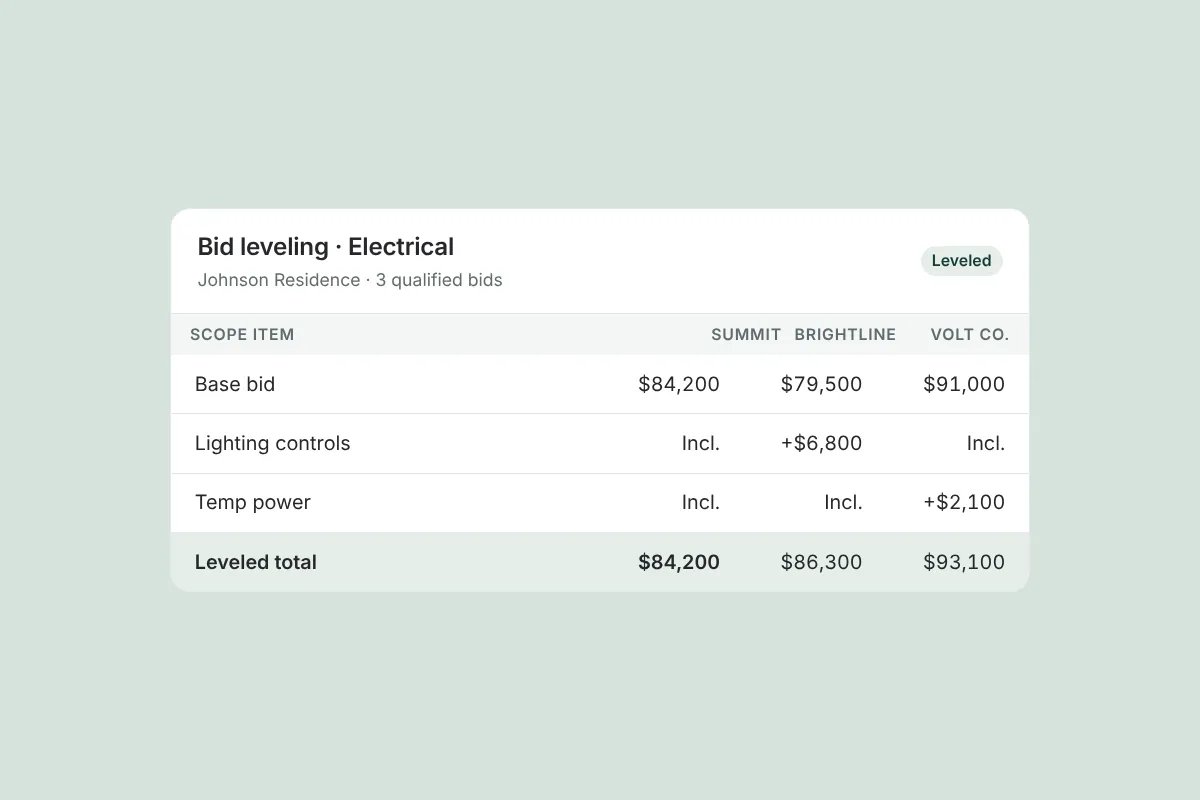
How to Send RFPs to Subcontractors and Compare Bids
A step-by-step bid process for residential builders: write a clear scope, send one RFP to every sub, level the bids line by line and award with confidence.
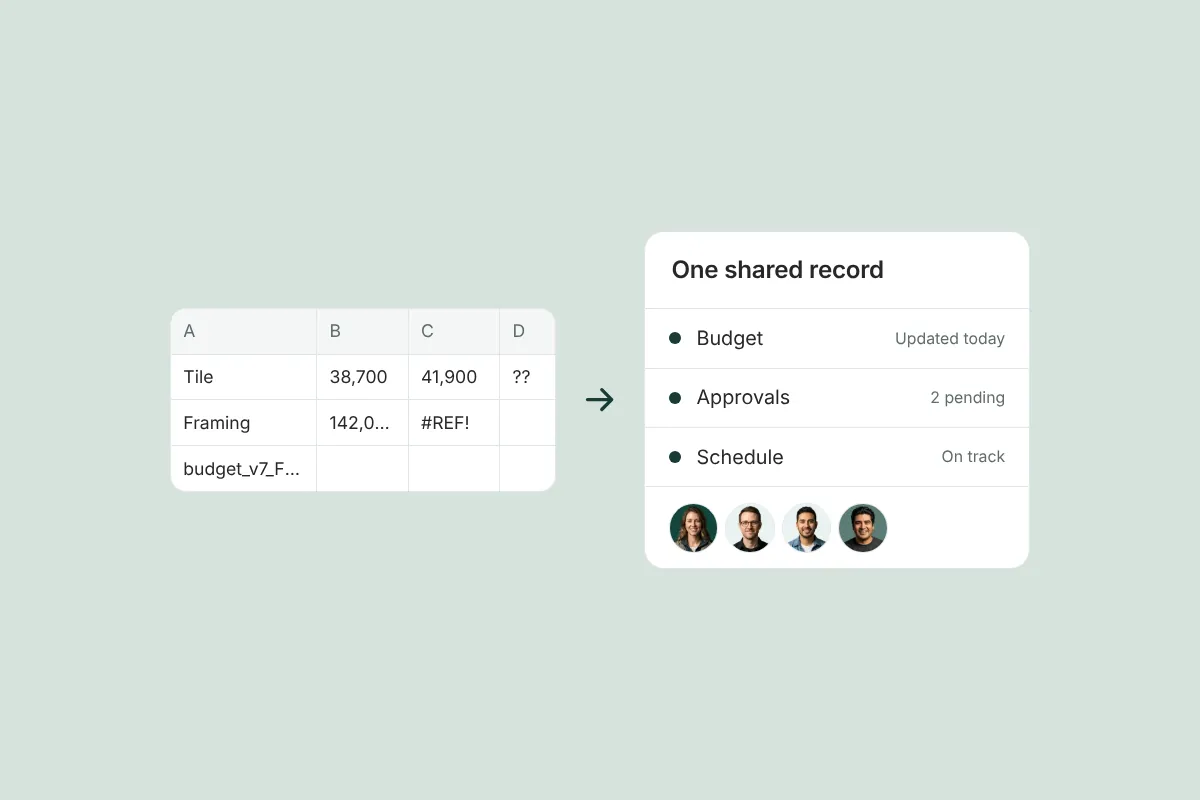
Spreadsheet vs. Project Management Software for Small Residential Builders: When to Switch
An honest comparison of spreadsheets vs. construction project management software for small residential builders, and the signs it’s time to switch.
Get started with Ally
Start with one project and expand as your business grows. No hidden fees, no long-term contracts.