
What to Do When a Homeowner Keeps Changing Their Mind Mid-Build

Summary
Homeowners often change their minds mid-build because they struggle to visualize blueprints in real life. To protect your profit and schedule, you need a formal system: always document requests in writing, get signed change orders before touching the job, and set clear expectations during pre-construction. Using project management tools like Ally can automate this process and keep your projects on track.
On this page
- Why homeowners change their minds so often during construction
- What a formal change order process actually looks like in practice
- How to set client expectations before the first shovel hits the ground
- What to do when the change has already happened and there's no paperwork
- How to handle a client who changes their mind on allowance items
- How project management tools reduce mid-build confusion
- When a client's changes signal a bigger problem
- What to put in your contract to protect yourself going forward
Every GC has had this client. The one who approved the cabinet layout in writing, watched you order the materials, and then called on a Tuesday to say they want to "revisit the whole kitchen." You've already got four weeks of lead time baked into the schedule, a sub lined up, and a deposit paid to the supplier. And now you're standing on the job site wondering how you're going to eat that cost without blowing up the relationship. It happens more than anyone talks about, and it doesn't mean the homeowner is a bad person. It means you need a tighter system than a handshake and a hope.
Why homeowners change their minds so often during construction
Most homeowners have never built a house before. They're making hundreds of decisions about things they can't fully visualize until they see them in real life. The tile they picked from a 4x4 sample looks completely different across 200 square feet of bathroom floor. The window placement that made sense on a blueprint feels off once the framing is up. This isn't irrational. It's the normal result of asking someone to commit to a finished product before they can see it.
The problem isn't that they change their minds. The problem is when there's no process in place to handle it. Without a clear system, every change becomes a conversation, and every conversation becomes a negotiation, and every negotiation slows the project down and costs someone money. Usually you.
What a formal change order process actually looks like in practice
A change order isn't just a piece of paper you send when a client wants something extra. It's a contractual record of what changed, what it costs, and what it does to the schedule. Every single scope change, no matter how small it seems, should go through this process. That includes the homeowner asking you to move an outlet six inches. That includes swapping a door swing. That includes changing the paint color after you've already primed.
Here's the workflow that actually works on a job site:
- Document the request in writing the moment it comes in. Don't wait until end of day. If they call you, follow up with a written summary of what they asked for.
- Estimate the cost and schedule impact before any work changes. Even a rough number keeps everyone grounded in reality.
- Get written approval before you touch anything. Verbal approvals are not approvals. They're conversations.
- Attach the signed change order to the original contract. Your project file should tell the complete story of every decision made.
The GCs who skip this process are the ones who end up in disputes at closeout wondering why the client thinks the project cost $40,000 more than they expected.
How to set client expectations before the first shovel hits the ground
The best time to talk about change orders is before anyone has changed anything. This is a pre-construction conversation, and it needs to be direct. Tell your clients that changes mid-build are common and completely okay, but they come with real costs. Explain that once materials are ordered, returns may not be possible. Explain that rescheduling a sub has a price. Explain that your schedule is a chain and pulling one link affects everything downstream.
Most clients respond well to this when it's framed correctly. You're not scolding them. You're just telling them how construction works so they can make better decisions. The ones who push back on this conversation are usually the ones who will give you the most trouble later. That's useful information too.
It also helps to build a few decision deadlines into your contract. If flooring needs to be selected by a certain date or you'll substitute a comparable product, write that in. If fixture selections need to happen before rough-in, spell that out. These milestones keep the decision-making process moving and give you legitimate leverage when a client drags their feet.
What to do when the change has already happened and there's no paperwork
Sometimes you're reading this article because you're already in it. The work changed, nobody signed anything, and now you're not sure who owes what. Here's what you do.
Stop the informal process immediately. Don't do another thing under verbal direction. Then document everything you can remember about the change as specifically as possible: what was asked for, when, by whom, and what work has already been done. Send that summary to your client and ask them to confirm it's accurate. Most of the time they will, because they're not trying to defraud you. They just weren't thinking about the paperwork.
From that point forward, every change gets written up before work starts. No exceptions. If a client resists this, remind them that it protects them too. A signed change order means they can't be surprised by a mystery charge at the end of the project. Frame it as a service you're providing, not a bureaucratic hurdle.
How to handle a client who changes their mind on allowance items
Allowances are where a lot of this chaos lives. You set a $15,000 allowance for appliances, and the client falls in love with a $28,000 package. Or you set a $12,000 tile allowance and they pick $8,000 worth of tile and then want a credit. The allowance system works fine when everyone understands it upfront, but most homeowners don't.
Walk your clients through the allowance section of your contract line by line before construction starts. Make sure they know that going over an allowance isn't a contractor decision, it's their choice, and it has a price attached. Make sure they know that coming in under an allowance may or may not generate a credit depending on your contract language. Get ahead of it, because the conversation is much harder after the selections are made.
When a client changes an allowance item mid-build, treat it exactly like a change order. Price the difference, document it, get it signed.
How project management tools reduce mid-build confusion
A lot of the chaos around client changes comes down to a communication problem. Email threads get buried. Text messages disappear. Verbal conversations become he-said-she-said situations at the worst possible time. When your decision-making process is scattered across multiple channels, it's almost impossible to maintain a clear record of what was approved and when.
This is where platforms like Ally Project Management make a real difference for residential GCs. Ally centralizes client approvals, change orders, and project communication in one place, so there's no more hunting through inboxes trying to reconstruct a conversation from three weeks ago. Clients get a clean interface where they can review and approve decisions quickly. The average approval time in Ally is around five minutes, and decision turnaround runs about three times faster than email.
When a homeowner wants to make a change, it gets logged, priced, and sent for approval inside the same system where everything else lives. That means your project file is always complete, your client always knows what they've approved, and you always have documentation if a dispute comes up. For GCs managing custom homes in the $500K to $20M range, that kind of paper trail isn't just convenient. It's protection.
Ally also handles scheduling, billing, pay applications, lien releases, and even AI-generated weekly project reports, so your entire project stays in one place instead of six different tools. If you've never tried it, there's a free 7-day trial at allyprojectmanagement.com with no long-term contract required. You can check pricing details at allyprojectmanagement.com/pricing.
When a client's changes signal a bigger problem
Sometimes constant scope changes aren't really about the finishes. They're a symptom of a client who isn't happy with the project overall, who has lost trust in you, or who is dealing with financial stress they haven't disclosed. Pay attention to patterns. One or two changes is normal. Ten changes in three weeks, especially on small things that didn't seem to bother them before, means something else is going on.
In these situations, a direct conversation is usually better than more paperwork. Sit down and ask them how they're feeling about the project. Not in a defensive way. Just ask. You'll often find out something important, like that they're worried about going over budget, or that a subcontractor said something offhand that got misinterpreted, or that they're just overwhelmed. These are problems you can actually solve if you know about them early.
The GCs who build the best client reputations aren't the ones who never have problems. They're the ones who catch problems early and handle them like professionals.
What to put in your contract to protect yourself going forward
If you're rebuilding your contract after a rough project, a few additions will save you a lot of pain. Include a clear change order clause that says no changes to scope, materials, or schedule are effective without a signed written change order. Include language about lead times and non-returnable materials so clients understand the financial stakes of late changes. Include selection deadlines with consequences if they're missed. And include a clause about schedule impact, making it clear that changes may extend the completion date and that you're not liable for delays caused by owner decisions.
Have a construction attorney review your contract language if you haven't done that recently. The upfront cost of that review is a fraction of what one bad dispute can cost you.
Running a custom home project is a complicated job even when everything goes right. When clients start changing their minds, the GCs who come out okay are the ones who have a process and stick to it. Get the system right, use the right tools, and the mid-build pivot goes from a crisis to a line item. Ready to stop using spreadsheets and start protecting your reputation? Sign up today at allyprojectmanagement.com.
Related resources
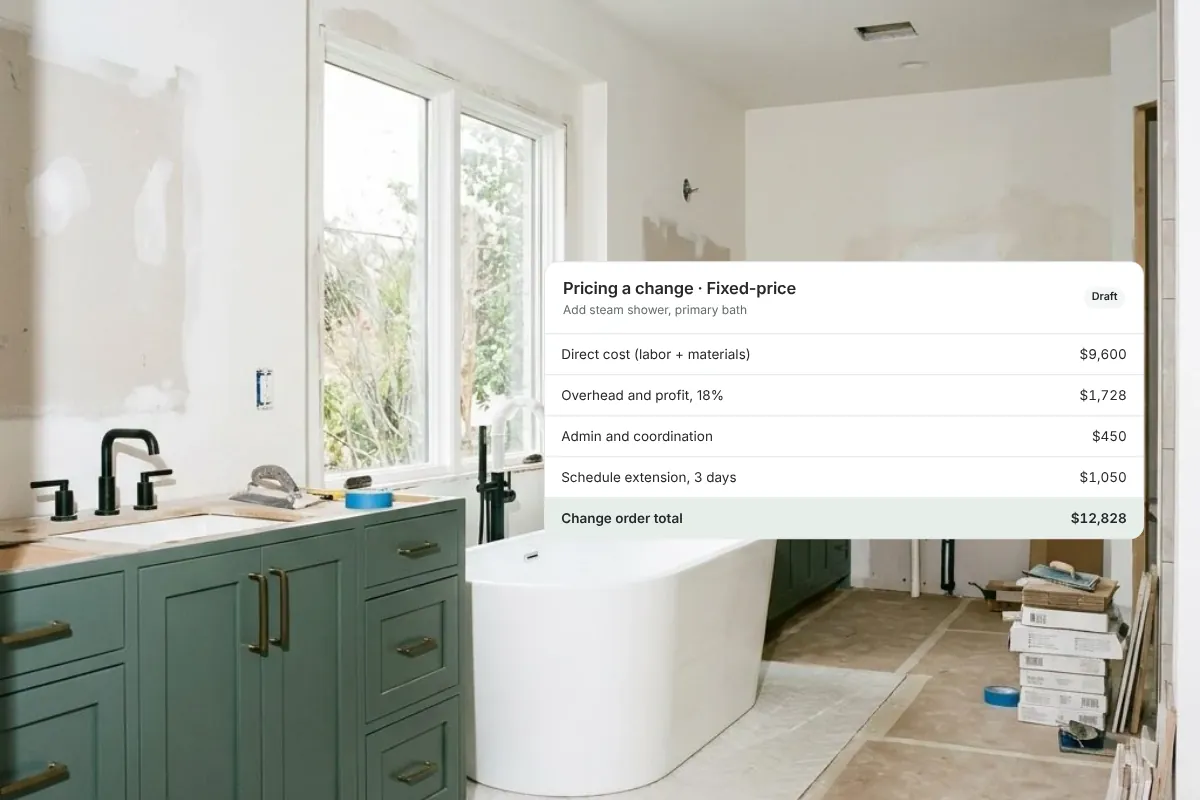
How to Price Changes on a Custom Home: Cost-Plus vs. Fixed-Price
How to price a change order fairly on a custom home: direct cost, markup, overhead, admin time and schedule impact, for fixed-price and cost-plus work.
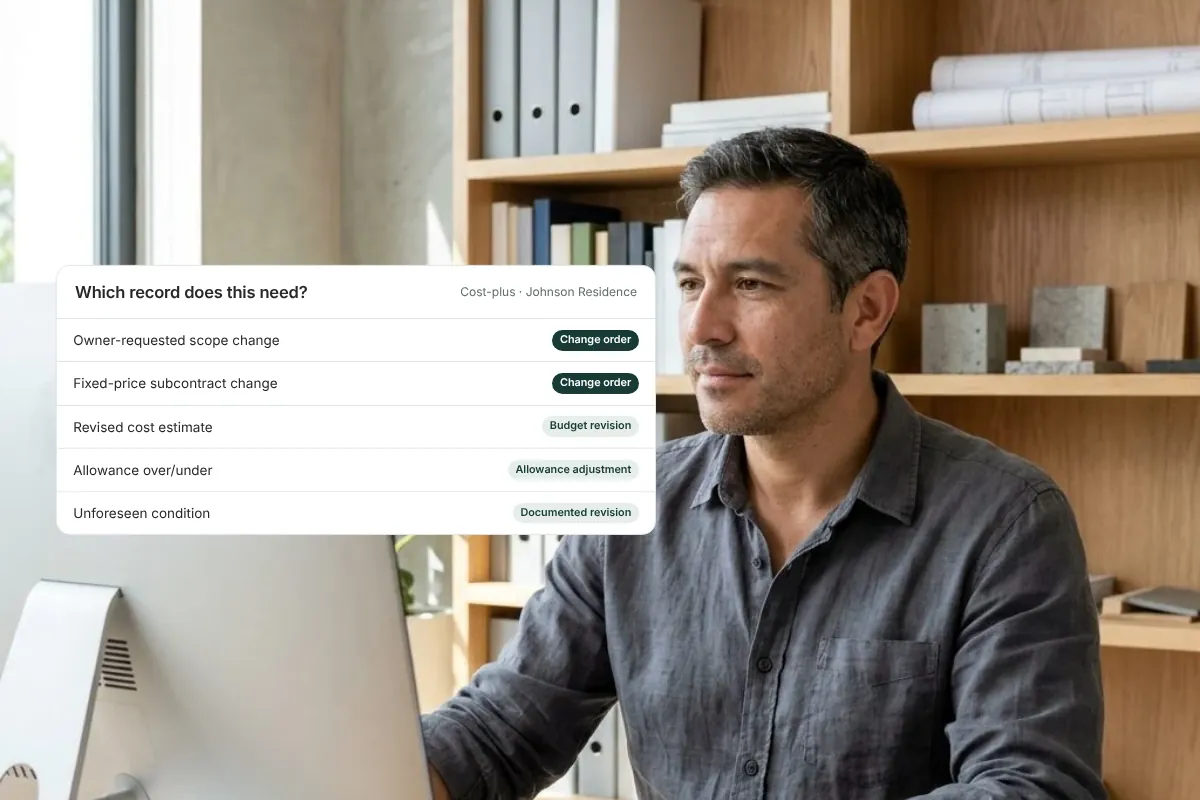
Change Orders vs. Budget Revisions: What Custom Home Builders Need to Know
Not every cost adjustment is a change order. Learn the five types of cost change on a custom home and the right way to document and authorize each one.
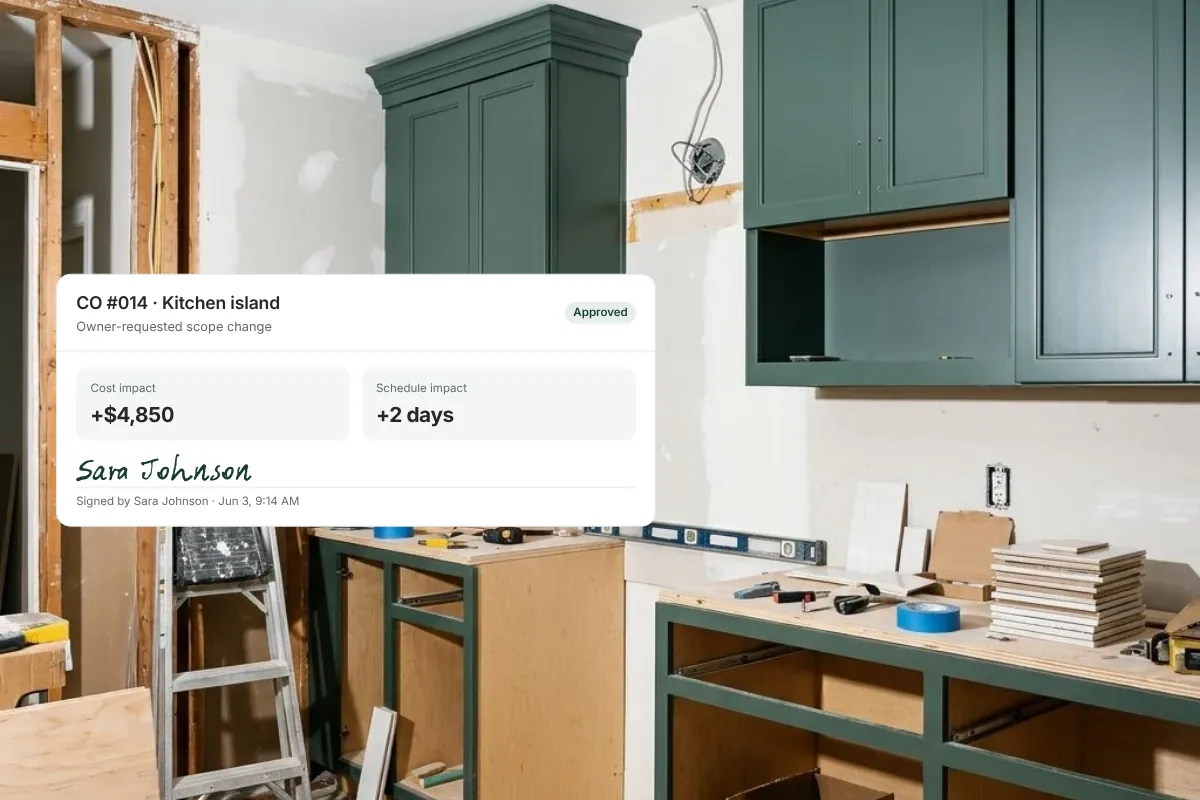
How to Write a Construction Change Order
How to write a construction change order: what to include (scope, cost, schedule impact, approval), a copy-ready template and a worked example.
Get started with Ally
Start with one project and expand as your business grows. No hidden fees, no long-term contracts.