
Allowances in Construction Contracts: How to Manage Them Without Surprising Your Client
Summary
An allowance is a budget placeholder for an item the homeowner hasn’t selected yet. Allowances cause disputes when the amounts are unrealistic or the overage rules are unclear. Set them from real pricing, define what they include and how overages work, and show the owner the running balance as selections are made.
On this page
- Key takeaways
- What is an allowance in a construction contract?
- Why allowances cause budget fights
- How to set realistic allowance amounts
- Sample allowance tracking table
- Is an allowance adjustment a change order?
- How to explain allowances to homeowners
- Common allowance mistakes to avoid
- How Ally helps manage allowances
- Frequently asked questions
An allowance in a construction contract is a budget amount set aside for an item the homeowner hasn’t selected yet, such as tile, lighting fixtures or appliances. When the final selection costs more or less than the allowance, the contract price adjusts by the difference. Allowances cause more budget fights than almost anything else, usually because the amounts were unrealistic or the overage rules were never explained.
Key takeaways
- An allowance is a placeholder, not a promise of what the homeowner’s taste will cost.
- Set allowance amounts from real pricing for the quality level the client expects, not from a low number that makes the bid look competitive.
- Define in writing what each allowance includes (material only or installed, tax, delivery) and how overages and credits are handled.
- Show the homeowner a running allowance balance as each selection is made, not at the end of the job.
- An allowance adjustment is not the same as a change order. Document it, but use the right process.
This is general information, not legal advice; check your contract and state law.
What is an allowance in a construction contract?
When a custom home is priced before every finish is chosen, the contract includes allowances for the undecided items. A typical high-end residential contract might carry allowances for plumbing fixtures, lighting, appliances, tile, flooring, countertops, cabinet hardware and landscaping. Each allowance is a dollar amount. When the homeowner makes the selection, the actual cost is compared with the allowance:
- Selection costs more: the overage is added to the contract (often with the contractor’s markup or fee, depending on the contract).
- Selection costs less: the difference is credited back to the owner.
Why allowances cause budget fights
Unrealistic amounts
The most common problem is an allowance set too low for the home being built. A $15 per square foot tile allowance in a home where the owner is touring designer showrooms guarantees an overage, and the owner will feel it was predictable. If you know the quality level, price allowances at that level, and say so.
Unclear definitions
Does the $8,000 lighting allowance include installation? Tax? Delivery? The electrician’s time to hang a 60-pound chandelier? If the contract doesn’t say, the homeowner will assume the answer most favorable to them.
Unclear overage rules
Is markup or the cost-plus fee applied to overages? Are credits returned in full? When is an overage billed? These rules belong in the contract and in the conversation at signing, not in the first overage invoice.
Surprises at the end
If the homeowner learns about allowance overages one at a time, or all at once at the final invoice, it feels like the budget was never real. Running balances prevent that.
How to set realistic allowance amounts
- Ask about expectations early. Look at the homeowner’s inspiration images and previous homes, and talk with the interior designer.
- Price the expected quality level. Use recent quotes for comparable selections, not last year’s averages.
- Define the basis. State whether each allowance is material only or installed, and whether it includes tax, freight and accessories (trim pieces, setting materials, mounting hardware).
- Separate labor where it varies. Large-format or mosaic tile changes installation cost as much as material cost. Say whether install labor is in the allowance or the base contract.
- Explain it in plain language. Walk the homeowner through what each allowance buys at that number, with real examples.
Sample allowance tracking table
This is the kind of running allowance summary homeowners should be able to see at any point. Numbers are illustrative.
| Allowance | Basis | Allowance | Selected to date | Pending selections (estimate) | Projected total | Projected over / (under) |
|---|---|---|---|---|---|---|
| Plumbing fixtures | Material, incl. tax | $28,000 | $24,600 | $6,200 | $30,800 | $2,800 |
| Decorative lighting | Material only | $18,000 | $9,400 | $7,000 | $16,400 | ($1,600) |
| Appliances | Material, delivered | $45,000 | $52,300 | $0 | $52,300 | $7,300 |
| Tile | Material only | $22,000 | $11,800 | $9,500 | $21,300 | ($700) |
| Cabinet hardware | Material only | $6,500 | $0 | $6,500 | $6,500 | $0 |
| Total | $119,500 | $98,100 | $29,200 | $127,300 | $7,800 |
The “pending selections” column is what makes this useful. The homeowner can see that appliances are already $7,300 over, lighting has room, and the total is trending $7,800 over before they’ve picked the last fixtures. That is the moment to make tradeoffs, not after everything is installed. Pair it with the timing in our custom home selections checklist so decisions arrive in the right order.
Is an allowance adjustment a change order?
Not necessarily, and treating every allowance adjustment as a formal change order creates paperwork and delays. When a selection simply comes in over or under an existing allowance, the contract already anticipates the adjustment. What you need is a documented owner approval of the selection and its price, and a clear update to the running balance and budget.
A change order is the right tool when the scope itself changes, for example when the owner adds a scope that had no allowance at all or changes a fixed-price item. Our guide to change orders vs. budget revisions explains the five types of cost adjustment and the right documentation for each. Whatever the type, document authorization before proceeding, using the process appropriate to the work.
How to explain allowances to homeowners
A short, honest explanation at contract signing prevents most allowance disputes:
“Allowances are placeholders for things you haven’t picked yet. We set them at what we think your selections will cost based on what you’ve shown us. As you choose, we’ll show you the running balance for each one, so you always know if you’re trending over or under. If you go over, the difference is added; if you come in under, it’s credited back.”
Then keep the promise: update the balance after every selection, and share it the same way every time.
Common allowance mistakes to avoid
- Too many small allowances. Dozens of tiny allowances create dozens of tiny overages. Group related items (for example, all decorative lighting) where it makes sense.
- Allowances for items that are already designed. If the architect has specified the windows, price them; don’t carry an allowance that invites a later overage.
- No decision dates. An allowance without a decide-by date tends to get resolved late, when the only remaining options are the expensive ones with short lead times.
- Reporting overages only on invoices. The homeowner should see a projected overage when they are choosing, not when they are paying.
- Ignoring installation effects. A heavier fixture, a larger-format tile or a panel-ready appliance can change labor and other trades’ costs. Note those effects when the selection is approved.
How Ally helps manage allowances
In Ally, selections and allowances go to the homeowner for review and digital approval with photos and details, and every approval is logged with a timestamp. Because budget tracking is tied to that same approval workflow, the owner can see where their money is going instead of discovering overages on an invoice. See how budget management and client approvals work together in Ally.
Frequently asked questions
What is an allowance in a construction contract?
An allowance is a dollar amount included in the contract for an item the homeowner hasn’t selected yet, such as fixtures, lighting or tile. When the selection is made, the contract price adjusts up or down by the difference between the actual cost and the allowance, according to the contract’s terms.
Who pays for allowance overages in construction?
Typically the owner pays the amount by which a selection exceeds its allowance, and receives a credit when it comes in under. Whether markup or a cost-plus fee applies to overages depends on the contract. Spell this out at signing to avoid disputes.
How do you track construction allowances?
Track each allowance with its basis (material only or installed), the allowance amount, what has been selected, estimates for pending selections, and the projected over or under. Share the running balance with the homeowner after each selection.
How should allowances be set on a custom home?
Set them from current pricing for the quality level the homeowner actually expects, based on their inspiration, past homes and the designer’s input. Define what each allowance includes. Low allowances may make a bid look competitive, but they create predictable overages and erode trust.
Do allowance adjustments need a change order?
Usually not. If a selection comes in over or under an existing allowance, the contract already provides for the adjustment; document the owner’s approval of the selection and its price. Use a change order when the scope itself changes. Check your contract’s specific requirements.
Want homeowners to see their allowance balances as they choose? Book a demo.
Related resources
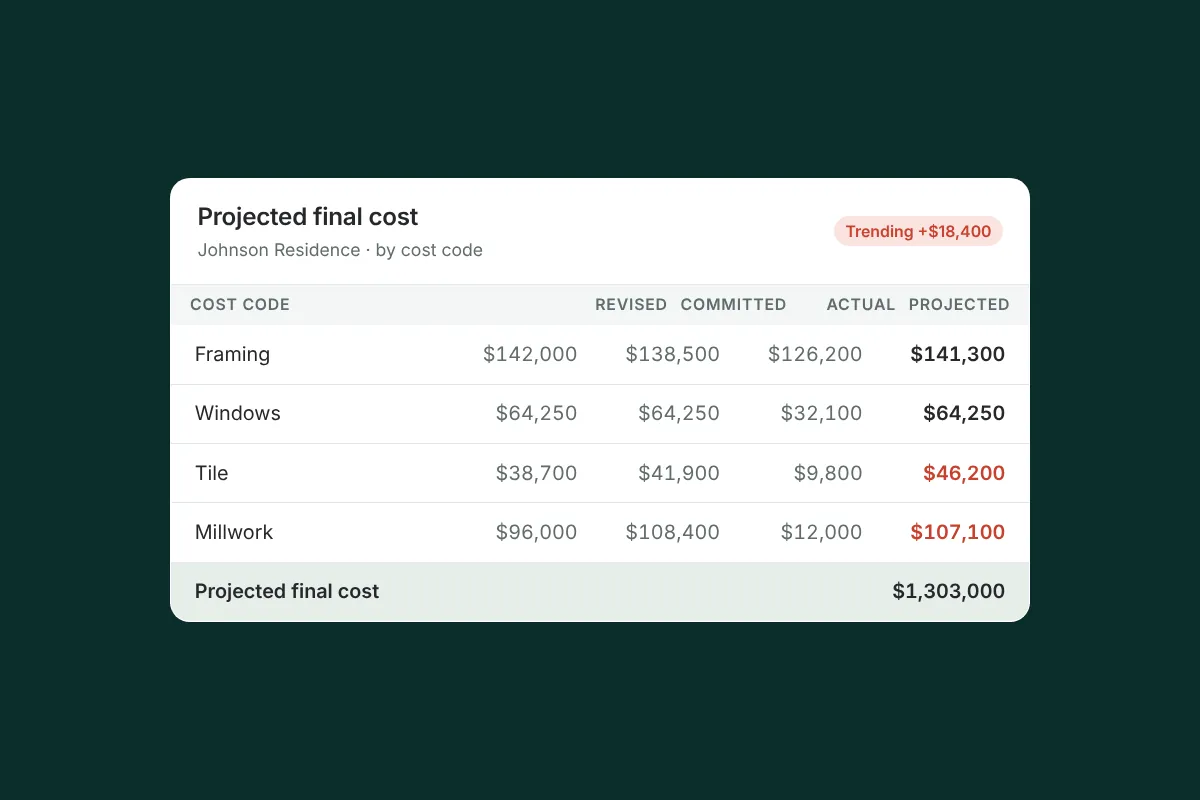
How to Track a Custom Home Budget: Current Financial Position and Projected Final Cost
Actual costs alone can hide an overrun. Track six numbers by cost code, through projected final cost, to see where a custom home budget is really heading.
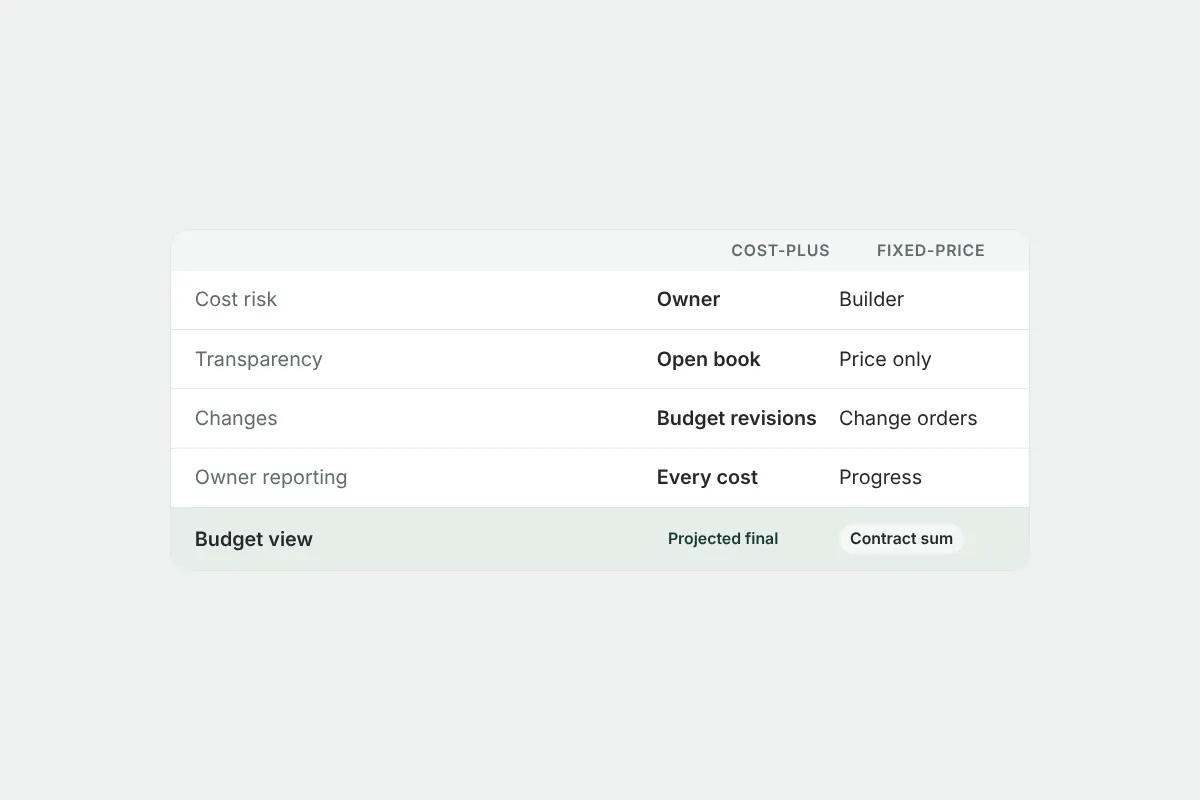
Cost-Plus vs. Fixed-Price Contracts: How Each Changes the Way You Manage a Budget
Cost-plus vs. fixed-price contracts for residential builders: how risk, transparency, admin work and client trust differ, and how to track the budget for each.
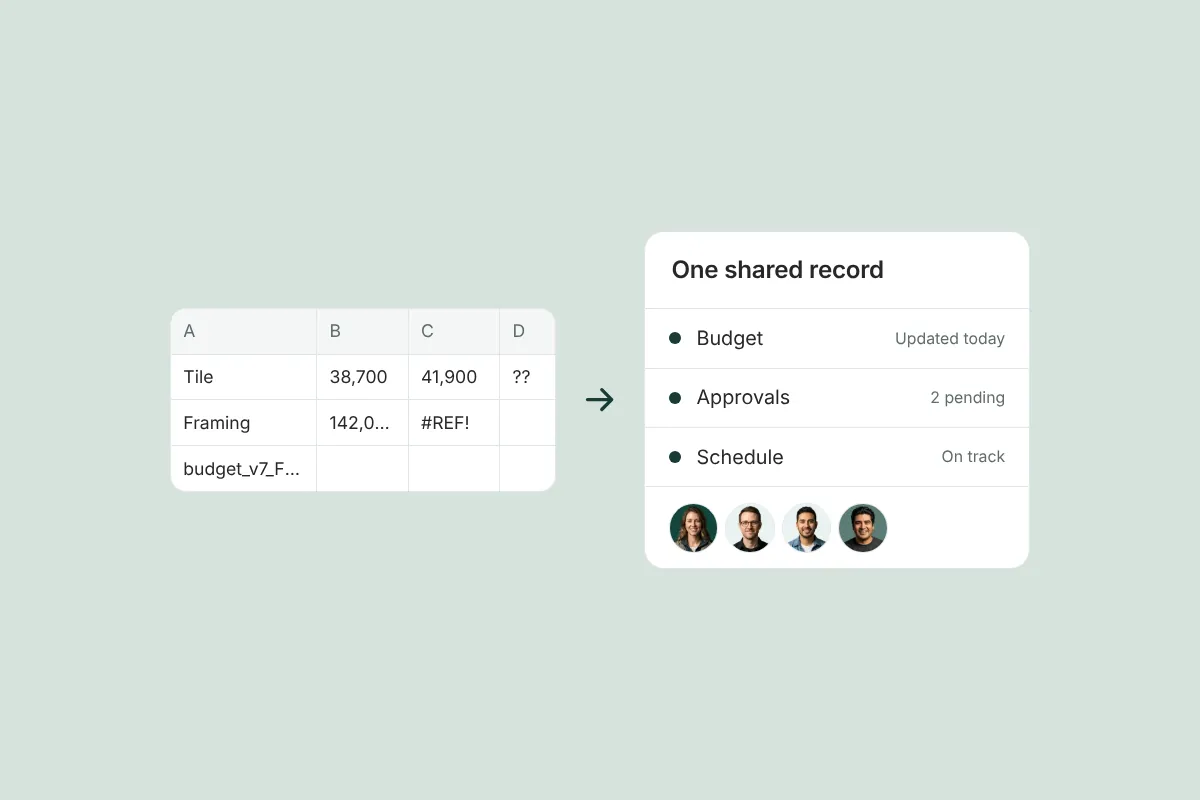
Spreadsheet vs. Project Management Software for Small Residential Builders: When to Switch
An honest comparison of spreadsheets vs. construction project management software for small residential builders, and the signs it’s time to switch.
Get started with Ally
Start with one project and expand as your business grows. No hidden fees, no long-term contracts.